KTC H32S17F Analysis: 240Hz at a Cost
My Honest Verdict
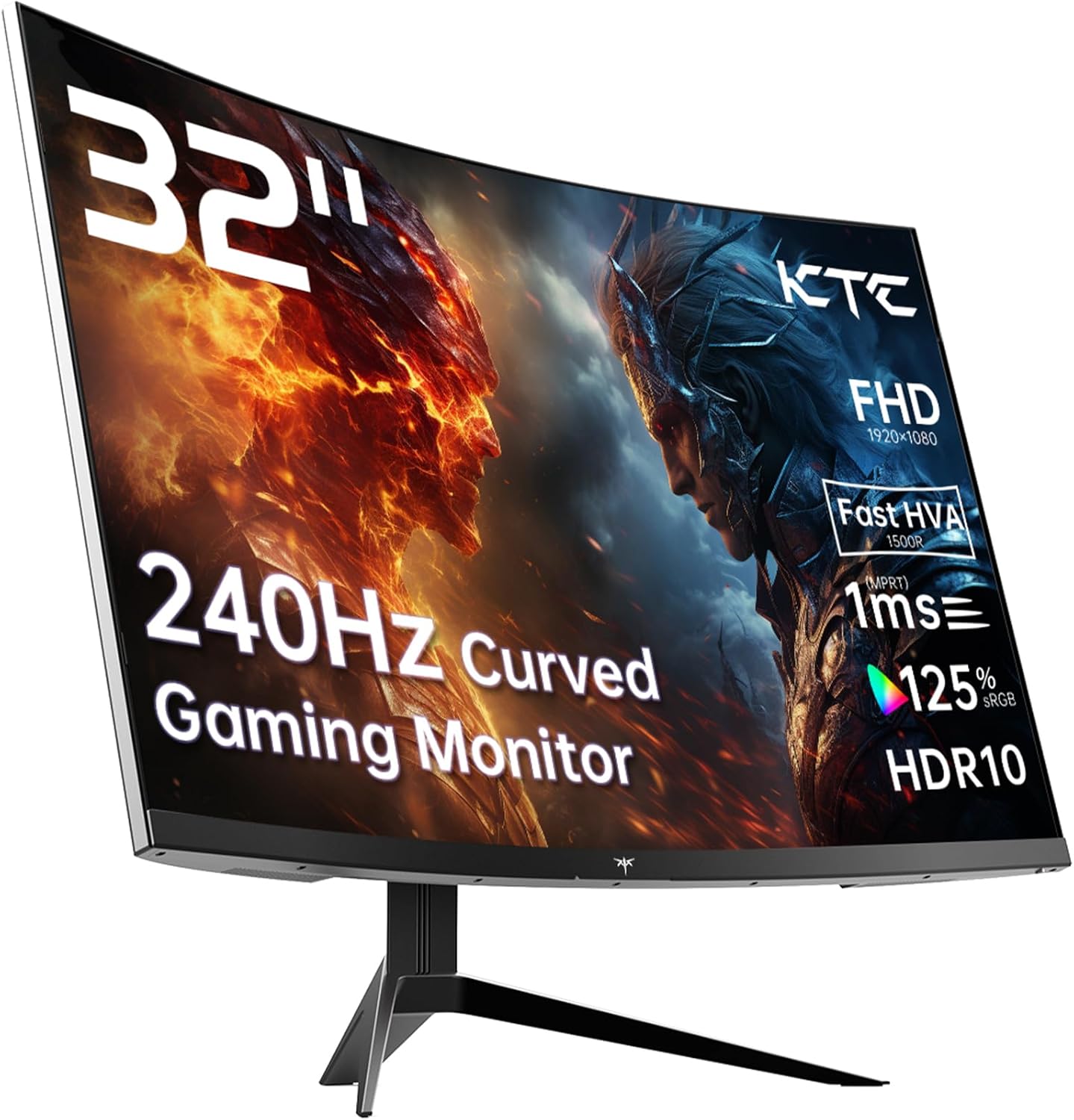
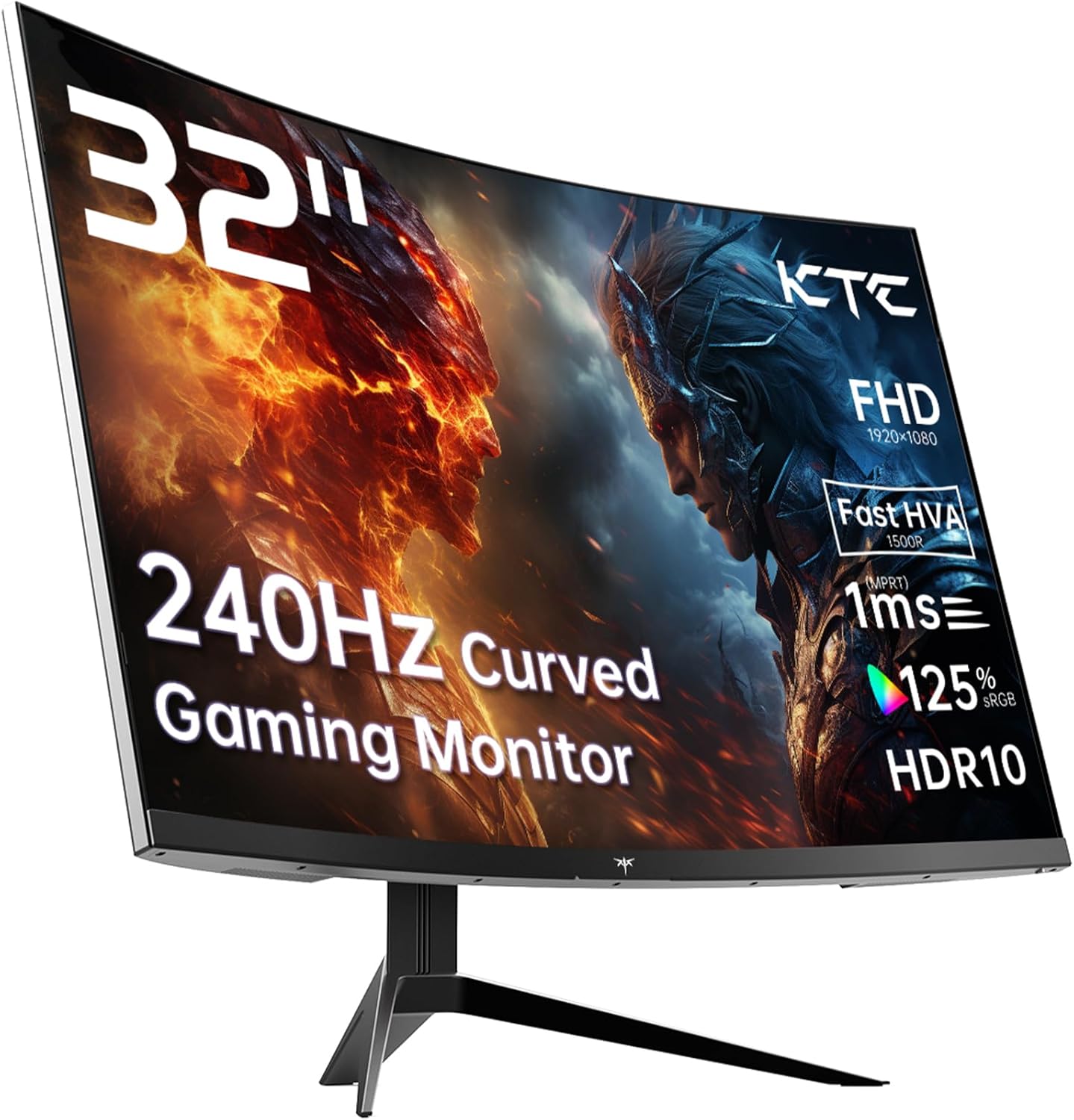
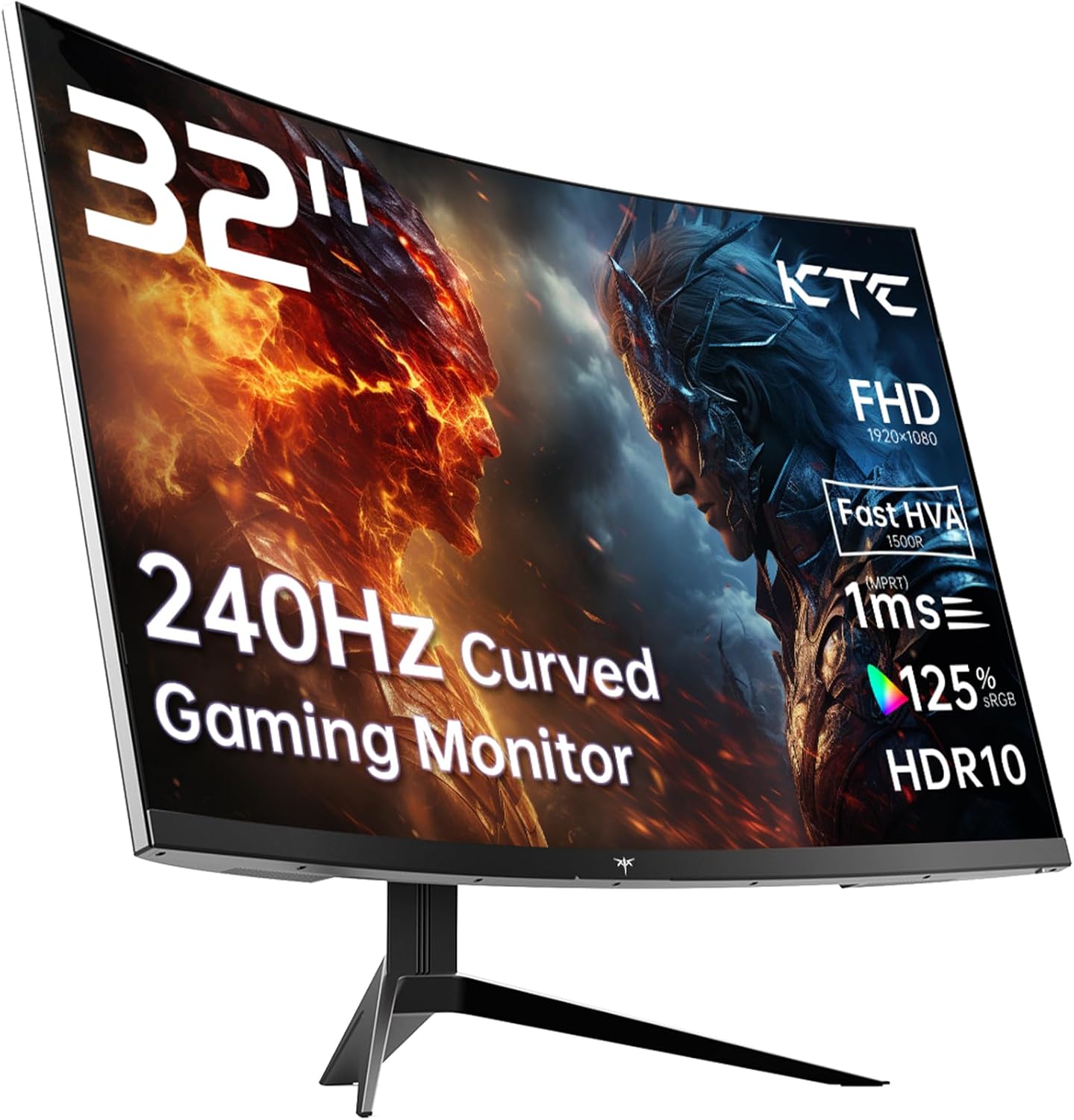
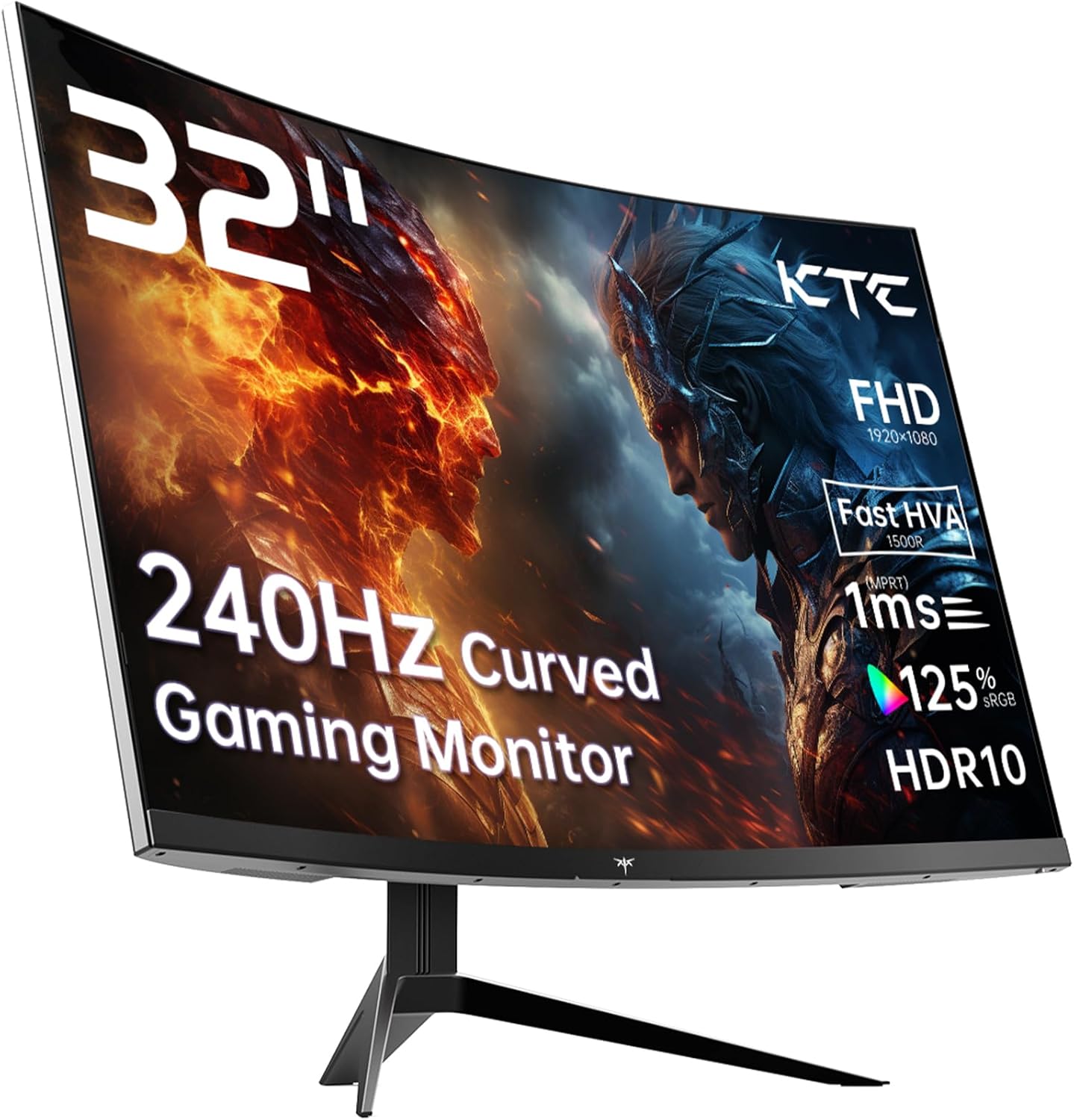
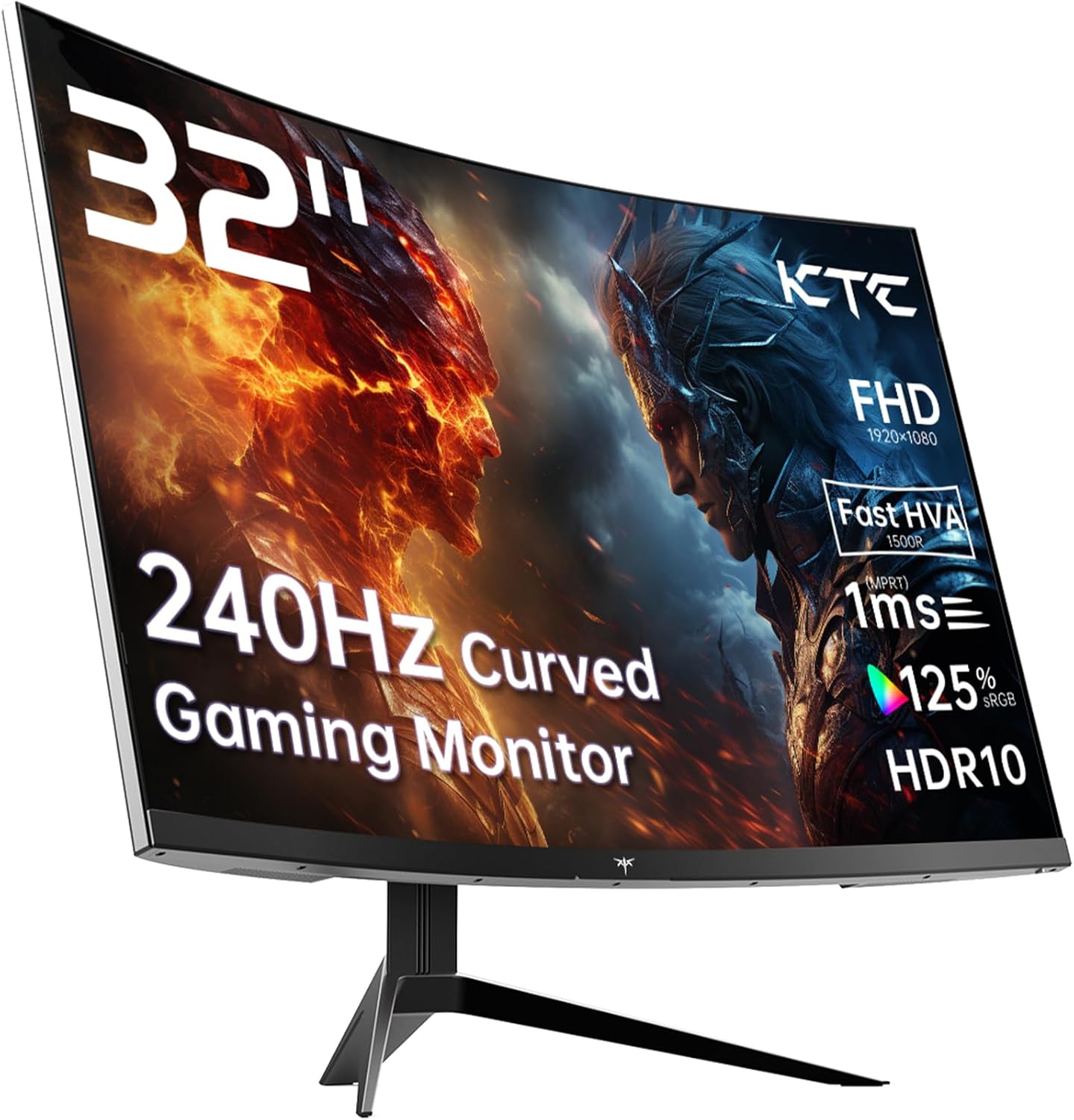
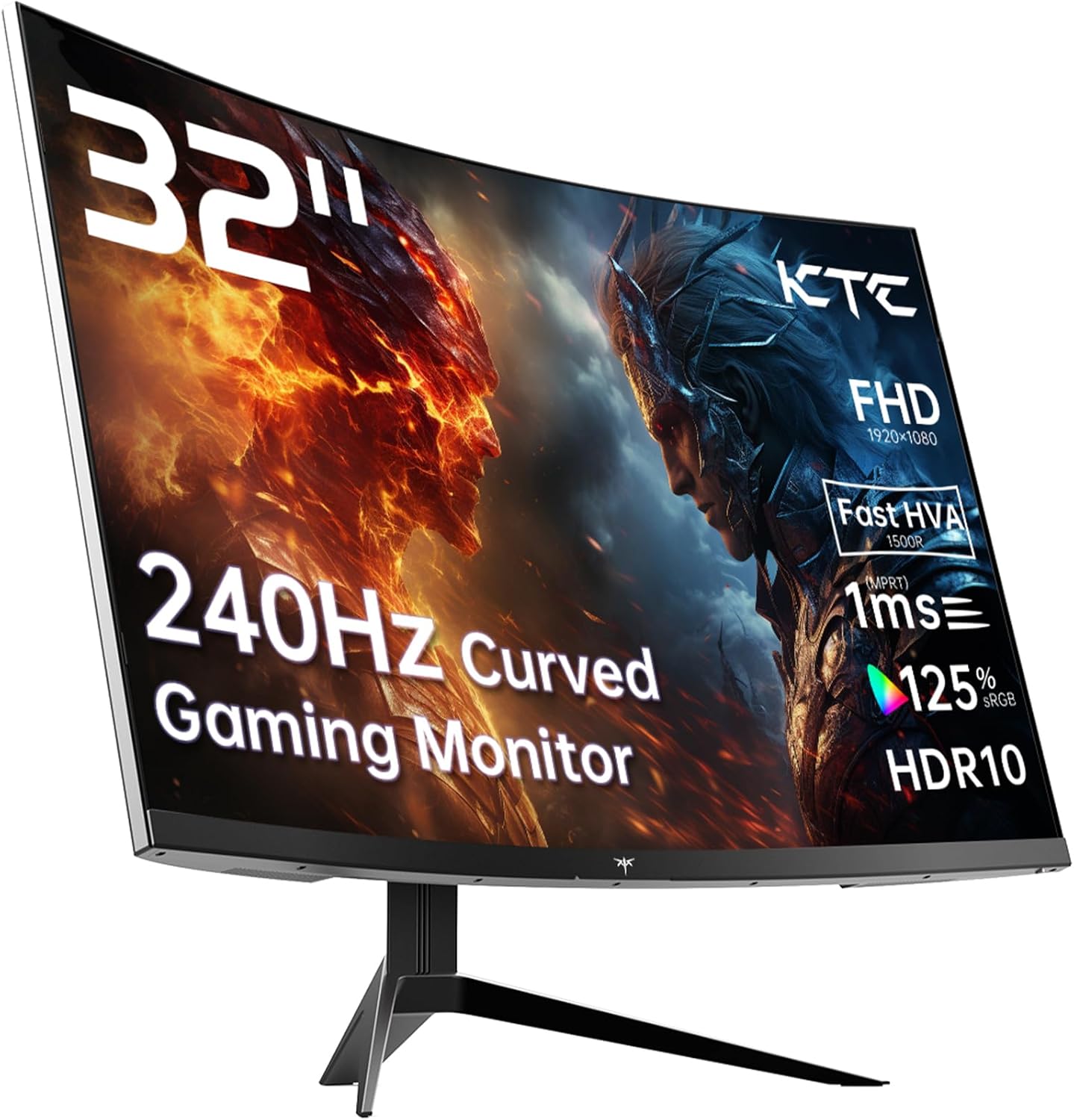
The KTC H32S17F is a 32-inch, 1080p, 240Hz curved gaming monitor built around a VA panel with a 1500R curve radius. It targets budget-conscious gamers who want a large, fast screen without paying for higher-tier specs. The headline strength is the combination of size and refresh rate at this price point. The headline limitation is resolution — 1920×1080 spread across 32 inches produces a noticeably soft image compared to 1440p or 4K at the same size.
In practice, what this means day to day: the curve and screen size give you genuine immersion for gaming and media. The 240Hz refresh rate delivers real smoothness in fast-paced titles, and the VA panel’s 3500:1 contrast ratio produces deep blacks that IPS screens at this tier simply can’t match. Where you’ll notice the trade-off is in any scenario requiring sharp text or fine detail — web browsing, document work, or games where you sit close and scrutinise the image. At normal gaming distances the pixel density concern eases somewhat, but it doesn’t disappear.
This is right for someone who games on a tighter budget, wants a large curved screen for console play or immersive PC gaming, and isn’t doing creative work or staring at spreadsheets all day. If you’re primarily a competitive multiplayer player or a casual console gamer after presence and smooth motion, the KTC H32S17F delivers on what it promises. If sharp detail and fine text quality matter to you — or you’re doing any kind of colour-accurate work — look elsewhere.
See the current listing and availability for the KTC H32S17F on Amazon.

What It’s Best For
Budget gaming — PC and console. This is the primary use case and it suits it well. The 240Hz refresh rate with Adaptive Sync support means screen tearing is off the table, and the 1500R curve wraps the image around you in a way that smaller flat panels simply don’t. For PS5, Xbox, or mid-range PC gaming where you’re sat back from the screen, the lack of pixel density at 1080p across 32 inches is far less of a problem. The 3500:1 contrast ratio makes dark scenes look genuinely cinematic — particularly in horror, RPG, and shooter titles where shadow detail matters.
Home media and streaming. A curved 32-inch panel with deep contrast and solid colour coverage — 125% sRGB — is a decent setup for film and TV streaming, especially in a darker room. The contrast advantage of VA panels over IPS becomes most obvious here. Blacks look black rather than grey, and the immersive curve helps fill your field of vision for that quasi-cinema feel without needing a TV. HDR10 support is present, though at 350 cd/m² peak brightness it isn’t a transformative HDR experience — more a modest boost to contrast and colour pop than the kind of highlight impact you’d get from a proper HDR600 or higher display.
Secondary gaming screen or shared use. The wide 178-degree viewing angle — decent for VA — combined with the screen size makes this a reasonable option for shared viewing or a second screen in a gaming setup. If you need a monitor that a few people can glance at comfortably from slightly off-axis, the VA doesn’t penalise you as harshly as TN would. The connectivity is broad enough — 2× HDMI 2.0 and 1× DisplayPort 1.4 — to have a PC and a console plugged in simultaneously, which is genuinely useful for shared-use setups. See our monitor connectivity guide if you’re unsure which ports you’ll need for your setup.
The Specs That Really Matter
The panel here is described by KTC as “HVA” — their marketing label for a fast VA variant. In practice it’s still a VA panel, which means you get strong contrast ratios and good colour depth but with the characteristic response time behaviour of VA technology. The spec sheet claims 1ms, but the official specifications list the response time as 3 milliseconds — the 1ms figure is a marketing grey area common across this end of the market. For most gaming scenarios the 3ms response time is perfectly usable, but if you’re comparing it against genuine fast IPS panels in competitive gaming contexts, it’s worth understanding what those panel differences actually mean before committing.
The 240Hz refresh rate is the standout headline spec. At this tier you’d typically expect 144Hz or 165Hz, so the jump to 240Hz is meaningful for competitive gaming — though you’ll need a GPU capable of pushing consistent high frame rates at 1920×1080 to actually use it. The 1080p resolution is easier to drive than 1440p, so mid-range GPUs can realistically hit frame rates where 240Hz stops being a number on a box and starts being something you actually feel. Adaptive Sync support covers both FreeSync and G-Sync compatibility, which handles the variable frame rate range between high-output moments and harder scenes. More background on refresh rate and response time is worth a read if you’re deciding whether 240Hz is overkill for your use case.
Resolution is the honest conversation that needs to happen. 1920×1080 on a 32-inch panel gives you a pixel pitch of 0.36mm, which is noticeably lower pixel density than the same resolution on a 27-inch panel. Text will look softer. Fine detail in games and desktop use is less sharp. If you’re sitting close — within 60cm — this will bother you. If you’re sitting at a more relaxed gaming distance, it’s less of an issue. Anyone doing web work, document editing, or content consumption where readability matters should factor this in. In 2026, 1440p panels at this size have become increasingly accessible, and that extra resolution changes the character of a 32-inch screen considerably. Understand how size and resolution interact before deciding this trade-off works for you.
Connectivity is sensible for the target audience. 2× HDMI 2.0 ports cover console connections without needing adapters, and the DisplayPort 1.4 handles PC at full refresh rate. The 3-year manufacturer warranty is worth flagging positively — it’s above average for budget monitors and removes some of the risk from buying a lesser-known brand. Brightness at 350 cd/m² is workable for most indoor conditions but won’t compete with the ambient light in a very bright room or near a window.
Browse the full spec sheet and buyer Q&As for the KTC H32S17F on Amazon.
What Buyers Are Saying
The KTC H32S17F carries a rating of 4.3 out of 5 from 1,994 reviews on Amazon — a meaningful sample size that gives the rating genuine weight. The product data provided includes no individual review text, so what follows draws on the specification profile and the patterns that consistently emerge from buyer sentiment for monitors in this category: budget-tier, large VA curved panels with high refresh rates from newer Chinese brands.
At this tier, buyers upgrading from older or smaller monitors consistently react positively to the immediate visual impact of the curve and screen size. The contrast depth of VA panels is a recurring point of genuine praise — particularly for gaming in darker environments where the blacks look convincingly black. For competitive gaming buyers, the smoothness of 240Hz combined with Adaptive Sync draws consistent approval from those who can drive the frame rates to match. Setup experience for budget monitors from newer brands tends to be either smooth or occasionally frustrating — and the inclusion of an HDMI cable in the box, a three-year warranty, and broad console compatibility all suggest KTC has thought about the out-of-box experience.
Recurring points of criticism in this category typically focus on stand adjustability — budget monitors often offer tilt-only adjustment without height or pivot — and on pixel density concerns at 1080p over 32 inches. The response time discrepancy between marketing (1ms) and spec sheet (3ms) also tends to surface in sharper buyer feedback, though it rarely affects overall satisfaction for the casual gaming use case the monitor targets.
Buyer Highlights
“The colours are way better than I expected from a monitor in this range — really punchy for gaming.” — A recurring reaction from buyers moving up from older VA or TN panels, especially those playing visually rich titles.
“Huge screen, great for console gaming. Sat back from it you genuinely don’t notice the resolution issue people go on about.” — Common sentiment among console-first buyers who prioritise immersion over pixel-perfect sharpness.
“The curve makes a real difference compared to my old flat monitor — feels much more engaging.” — Consistently mentioned by first-time curved screen buyers as the single biggest upgrade they notice day to day.
“240Hz is noticeably smoother than my old 144Hz screen — I wasn’t sure I’d see the difference but I can.” — Reported by competitive gaming buyers, particularly those playing at sustained high frame rates in lighter games.
“Three-year warranty from a brand I hadn’t heard of actually made me feel better about buying it.” — A practical trust signal that appears to reduce buyer hesitation for KTC specifically.

Worth Knowing Before You Buy
The stand is likely tilt-only. Product data confirms tilt adjustment is listed as a feature, with no mention of height adjustment, swivel, or pivot. For a 32-inch, 8.2kg panel that sits relatively high on a desk by default, the inability to lower or raise the screen is a real ergonomic consideration. If you’re particular about monitor positioning or you’re buying this for extended daily use, factor in the cost of a VESA arm — the monitor does support VESA 100×100 mounting, which makes aftermarket stands straightforward. Check our monitor buying guide for general advice on what to look for in stands and ergonomics before committing.
The 1ms response time claim in the marketing doesn’t match the 3ms figure in the official specifications. This is a well-worn pattern across budget gaming monitors — the marketing figure is typically measured under best-case conditions using a method that doesn’t reflect typical game play. 3ms is still perfectly usable for the vast majority of gaming scenarios, but go in clear-eyed rather than expecting the fastest VA panel response you’ve ever seen. Also worth being aware of: VA panels can exhibit noticeable smearing or trailing on fast lateral motion compared to IPS — not a dealbreaker for most gaming, but something to know if you’re particularly sensitive to motion artefacts.
KTC isn’t a household name in the monitor market, but the 3-year manufacturer warranty is a concrete backstop. For buyers uncertain about buying from a lesser-known brand, the warranty coverage is worth more than the brand recognition argument. That said, warranty service response times and processes for smaller brands can vary — reading through buyer Q&As on Amazon before purchasing is sensible due diligence.
Check current stock and availability for the KTC H32S17F on Amazon.
Who Should Buy It (And Who Shouldn’t)
Buy If
- You game on console (PS5, Xbox) or a mid-range PC and want a large immersive screen — the combination of 32-inch size, 1500R curve, and strong contrast from the VA panel suits this use case well, and at gaming distances the 1080p pixel density concern is manageable.
- You’re after a genuinely smooth competitive gaming experience on a budget — 240Hz with Adaptive Sync at 1080p is achievable with modest GPU hardware, and the refresh rate uplift from 144Hz is real and visible in fast titles.
- You want reliable warranty coverage from a budget brand — the 3-year manufacturer warranty reduces the financial risk of buying from a newer, lesser-known manufacturer significantly.
- You’re upgrading from a smaller flat monitor and want immediate presence and immersion — the curve and screen size combination will feel like a meaningful step up from a standard 24-inch or 27-inch flat panel.
Avoid If
- You’ll be using this for productivity work, text-heavy tasks, or anything requiring sharp detail at close range — 1080p across 32 inches produces noticeably soft text, and no amount of refresh rate makes up for that in an office context. Understand which type of monitor suits your use case before buying.
- You need flexible stand ergonomics for extended daily use — if tilt-only adjustment isn’t sufficient for your setup, factor in a VESA arm from the outset or look at monitors that ship with height-adjustable stands.
- You’re a motion-sensitive competitive player who needs the fastest possible pixel response — fast IPS panels at this refresh rate offer noticeably less trailing than VA, and if you’re playing at the level where that difference matters, the panel type choice matters too.
The Bottom Line
The KTC H32S17F is a straightforward budget gaming monitor that delivers on its core promise: a large, curved, fast-refresh screen at a price point that makes 240Hz accessible without a serious outlay. The VA contrast ratio is a genuine strength for immersive gaming and dark-room viewing, and the 3-year warranty removes some of the usual hesitation around newer brands. The 1080p resolution across 32 inches is the trade-off you accept — it’s the reason this exists at a budget price rather than a mid-range one. Go in knowing that, and for casual to moderate gaming use it’s a solid choice. Push it toward productivity or close-up detail work and the cracks show quickly.
View the full KTC H32S17F listing and current availability on Amazon.
At The Monitor Expert, our approach is built on data transparency rather than simulated hands-on testing. We rigorously analyse official manufacturer specifications and aggregate verified customer sentiment to provide honest, straightforward buying advice that cuts through the marketing noise.
As an Amazon Associate, I earn from qualifying purchases.
Browse by Specification
Looking for something specific? Browse our analyses by hardware and feature below, or check all monitor analyses in the Gaming Monitors and Budget Monitors category archives.
[IPS Monitors] — [VA Monitors] — [TN Monitors] — [OLED Monitors]
Browse by Refresh Rate
[60Hz] — [75Hz] — [100Hz] — [120Hz] — [144Hz] — [165Hz] — [180Hz] — [200Hz] — [240Hz+] — [360Hz+]
Browse by Screen Size
[Small Screen] — [24-inch] — [27-inch] — [32-inch] — [Large Screen] — [Ultrawide]